Table of Elements: A Fun and Useful Font
Table of Elements is more than just a font—it's a creative tool that brings personality and clarity to your designs. Whether you're working on a website, a presentation, or a print project, this display font offers a unique way to capture attention and convey information with style.
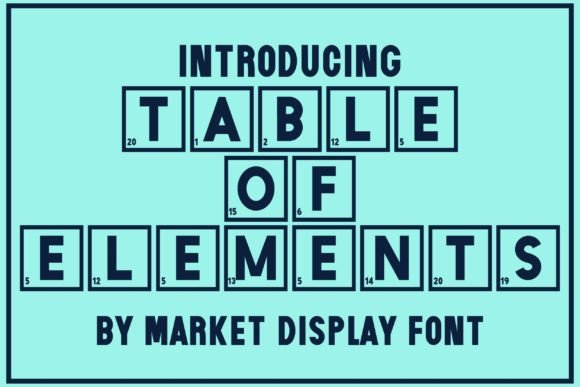
Designed for readability and visual appeal, Table of Elements combines the structure of a table with the creativity of typography. It’s ideal for headings, titles, and any content that needs to stand out while remaining easy to read. Its clean lines and organized layout make it perfect for both digital and physical media.
What Makes Table of Elements Unique?
Unlike traditional fonts, Table of Elements uses a grid-like format that mimics the structure of a table. This design choice allows for clear organization of text, making it especially useful when presenting data, instructions, or lists. The font’s layout encourages a logical flow, helping readers process information more efficiently.
One of the standout features of Table of Elements is its versatility. It can be used in a variety of contexts, from simple text displays to complex layouts. Its structured approach makes it a great fit for educational materials, technical documents, and even artistic projects where visual organization matters.
The font also has a playful side. While it’s practical, it doesn’t sacrifice style. Its design elements add a touch of fun without being distracting, making it suitable for both professional and casual settings. Whether you’re creating a brochure, a poster, or a social media graphic, Table of Elements can enhance the visual impact of your work.
Why Use Table of Elements?
If you're looking for a font that balances form and function, Table of Elements is an excellent choice. It’s particularly useful for anyone who wants to improve the clarity of their content while maintaining a visually engaging design. This font is ideal for those who need to present information in a structured way without compromising on aesthetics.
For educators, Table of Elements can help organize lesson plans, study guides, and classroom materials. For professionals, it can be used in reports, presentations, and marketing collateral. For creatives, it offers a fresh approach to typography that stands out from the crowd.
Beginners will find Table of Elements easy to use, thanks to its straightforward design and intuitive layout. It doesn’t require advanced skills to implement, making it accessible to a wide range of users. At the same time, experienced designers can take advantage of its flexibility to create more complex and dynamic compositions.
Where to Use Table of Elements
Table of Elements works well in a variety of settings. In digital environments, it can be used for website headers, app interfaces, and online presentations. Its structured format helps users navigate content more easily, which is especially important in web design and user experience (UX) development.
In print, Table of Elements adds a professional touch to brochures, flyers, and posters. Its clear layout ensures that information is easy to read, even at smaller sizes. This makes it a valuable asset for businesses looking to communicate effectively with their audience.
For personal projects, Table of Elements can be used in journals, planners, and DIY crafts. Its organized style helps keep notes and ideas in order, while its visual appeal makes it a pleasure to look at. Whether you're planning a trip, tracking goals, or organizing tasks, this font can help you stay on top of your priorities.
Practical Examples of Table of Elements
Imagine you're designing a website for a local bakery. Using Table of Elements for your menu section could make it easier for customers to scan through available items. The structured layout ensures that each item is clearly presented, improving the overall user experience.
Another example is a teacher creating a handout for students. By using Table of Elements to list key concepts, the teacher can help students better understand and retain information. The font’s clarity and organization make it an effective tool for educational purposes.
For a small business owner launching a new product, Table of Elements can be used in promotional materials. A well-organized product description with clear headings and bullet points can attract more attention and encourage purchases.
Things to Consider Before Using Table of Elements
Before incorporating Table of Elements into your projects, consider the context in which it will be used. While it’s highly readable, it may not be the best choice for long blocks of text. Instead, use it for headings, subheadings, and short sections where visual impact is important.
Also, think about the overall design of your project. Table of Elements works best when paired with other fonts that complement its style. A contrast between a bold display font and a simpler body font can create a balanced and professional look.
Finally, test the font in different sizes and formats to ensure it meets your needs. What looks good on a screen may not translate well to print, so it’s important to review your work in multiple settings before finalizing it.
Conclusion: Embrace the Power of Table of Elements
Table of Elements is a versatile and effective font that can elevate your designs in many ways. Its structured layout, readability, and visual appeal make it a valuable addition to any project. Whether you're a beginner or an experienced designer, this font offers a unique way to present information with confidence and style.
By using Table of Elements thoughtfully, you can create content that is both informative and engaging. Add it confidently to your next project, and you’ll see the difference it makes. With its blend of functionality and creativity, Table of Elements is a font worth exploring.